

Water damage in a commercial building can disrupt daily operations, damage expensive equipment, and create unsafe conditions for employees and customers. Whether caused by a burst pipe, malfunctioning sprinkler system, leaking roof, or flooding, water intrusion requires immediate attention. Even a relatively small incident can affect multiple areas of a property, potentially forcing businesses to suspend operations while repairs take place.
The first 24 hours are especially important for limiting damage. Taking the right steps can help business owners and property managers protect their investments, reduce operational disruptions, and avoid unnecessary complications with commercial water damage restoration.
1. Prioritize Safety & Identify the Water Source
Before beginning any commercial water damage cleanup, make sure everyone inside the building is safe. Water can create electrical hazards, weaken building materials, and introduce contaminants that pose health risks.
Start by restricting access to affected areas. Depending on the severity of the damage, you may need to evacuate certain rooms, floors, or sections of the building. Important safety precautions include:
- Avoid electrical hazards – Keep employees away from standing water near outlets, electrical panels, and equipment. Have a qualified professional evaluate electrical systems before restoring power.
- Identify the water source – Determine whether the damage originated from plumbing, roofing, sprinkler systems, or an external flooding event.
- Stop additional water intrusion – If it is safe and accessible, shut off the appropriate water supply to prevent further flooding.
- Watch for structural damage – Saturated ceilings, walls, and flooring may become unstable and require professional assessment.
- Consider contamination risks – Floodwater and sewage backups may contain harmful microorganisms that require specialized commercial flood cleanup procedures.
Avoid allowing employees to enter damaged areas until qualified professionals have evaluated potential hazards.
2. Contact a Commercial Water Damage Restoration Company
Once immediate safety concerns have been addressed, contact an experienced commercial water damage restoration company. Prompt intervention can help prevent moisture from spreading throughout the building and causing additional deterioration.
What Happens During Emergency Water Removal?
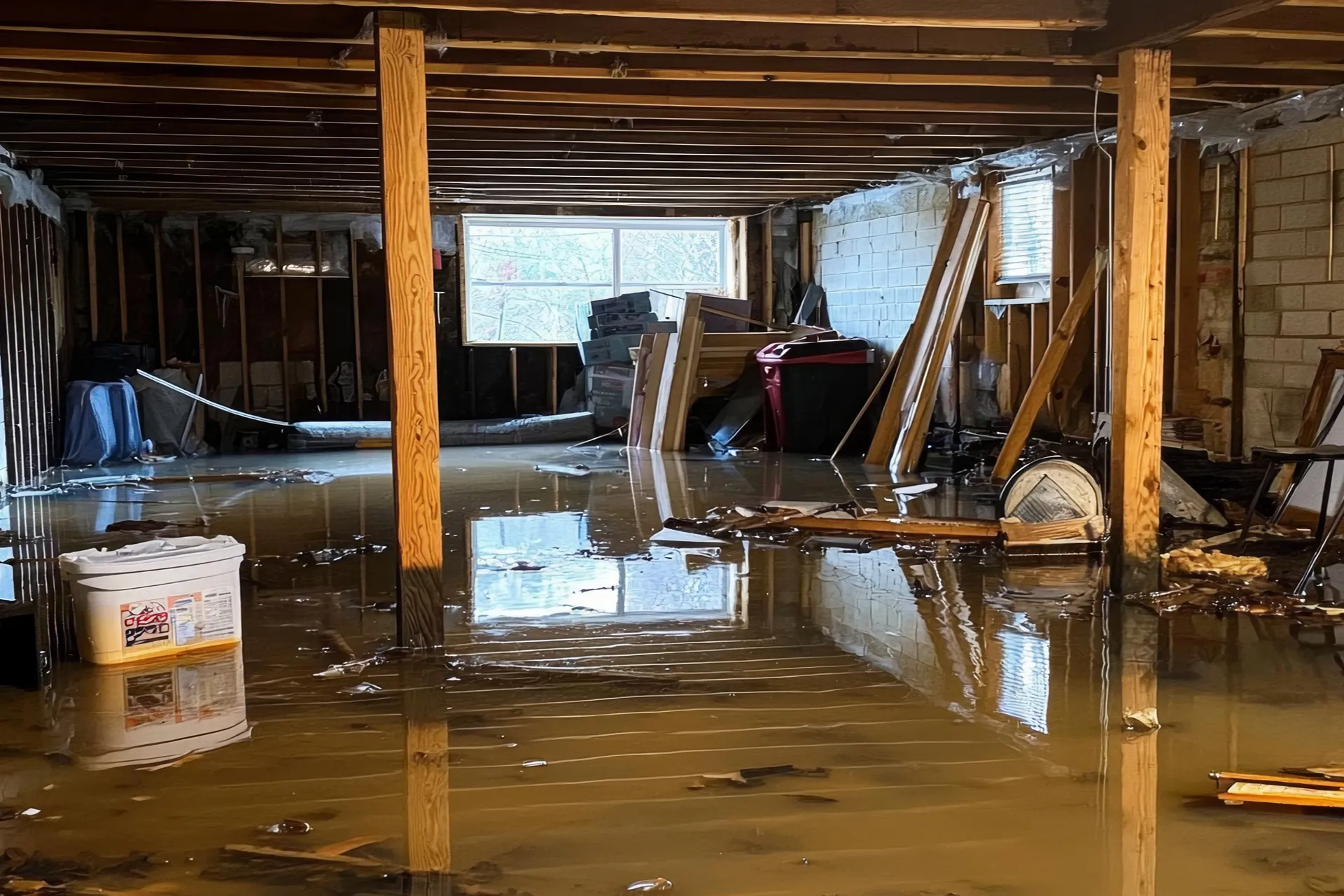
The initial response typically focuses on stabilizing the property and removing standing water. Depending on the situation, technicians may use commercial-grade pumps, extraction equipment, and industrial vacuums to remove accumulated water.
However, visible water is only part of the problem. Moisture can penetrate carpeting, drywall, insulation, subflooring, and other building materials. Thermal imaging cameras and moisture meters can identify hidden moisture that might otherwise go undetected. These findings help determine where drying equipment is needed and which materials require additional attention.
3. Document the Damage & Notify Your Insurance Provider
Water damage can create substantial financial losses for commercial property owners. Proper documentation is essential for supporting an insurance claim and tracking the incident’s effect on business operations. Once it is safe to do so, begin collecting information about the damage.
Create a Detailed Record of the Incident
Take photographs and videos of affected areas before cleanup begins, provided doing so does not delay emergency mitigation. Document visible damage to flooring, walls, ceilings, furniture, and equipment. Your records should also include:
- Damaged inventory, merchandise, and supplies
- Affected computers, machinery, and electrical equipment
- Important documents and business records exposed to moisture
- Areas closed to employees, tenants, or customers
- Temporary relocation expenses and other operational disruptions
- Dates, times, and details of communications related to the incident
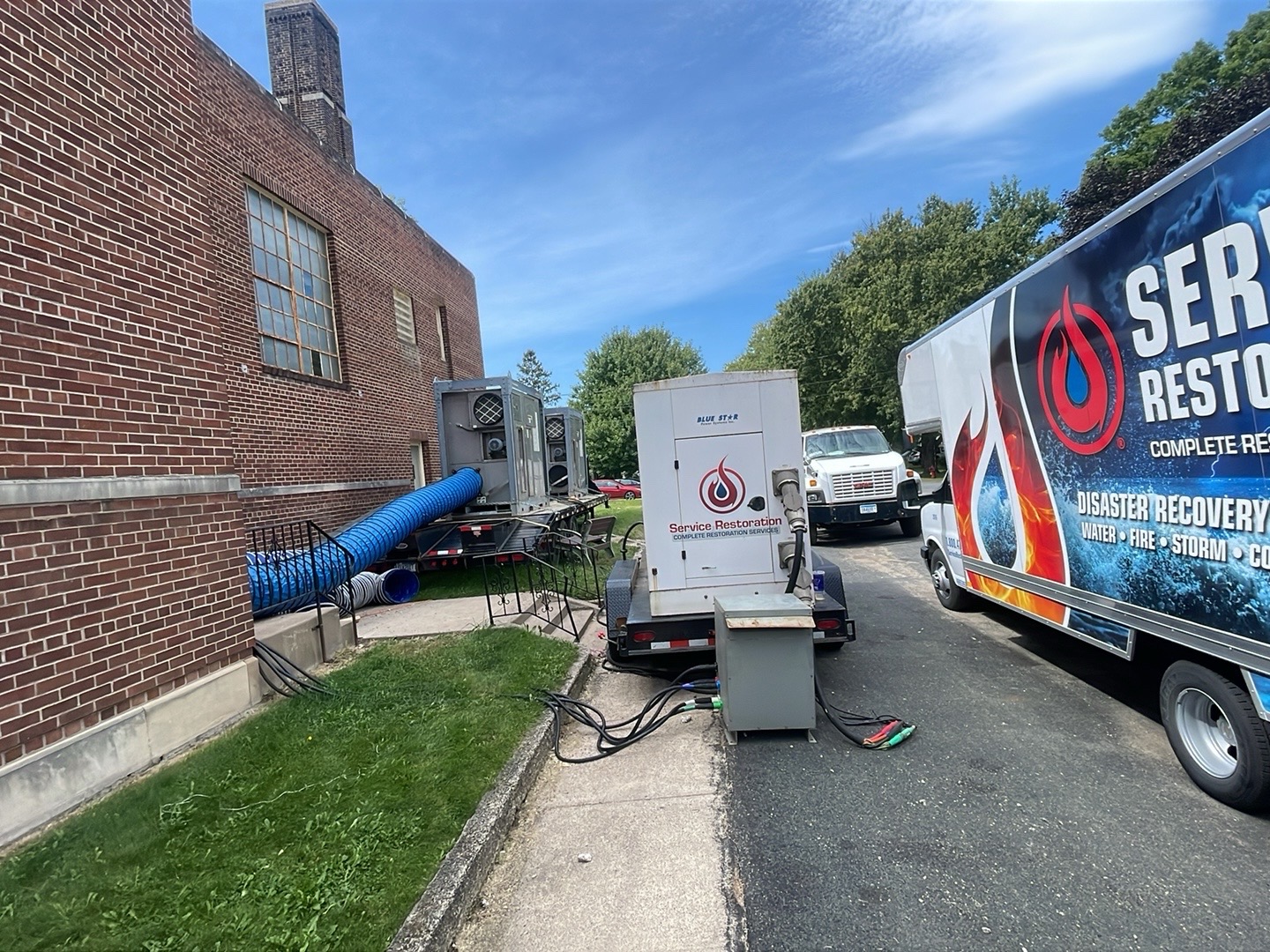
Service Restoration works directly with almost all insurance carriers, helping commercial customers navigate the claims process from the initial assessment through restoration. Our team documents damage and coordinates with insurance representatives to make recovery less stressful.
4. Develop a Plan to Minimize Business Downtime
Commercial water damage restoration involves more than repairing a building. Business owners and facility managers must also consider how the incident affects employees, tenants, customers, and ongoing operations. A well-organized recovery plan can help maintain essential activities while restoration work progresses.
Communicate With Employees & Tenants
Inform affected employees, tenants, and other building occupants about restricted areas, temporary closures, and anticipated changes to building access. Provide updates as conditions change so everyone understands which areas remain available and which activities must be postponed.
Consider Temporary Work Arrangements
If office water damage makes certain workspaces unusable, consider relocating employees to unaffected areas or arranging remote work. For businesses that depend on specialized equipment or customer-facing spaces, identify essential operations and evaluate whether they can continue elsewhere.
Protect Unaffected Areas
Preventing additional damage is another important part of reducing downtime. Restoration professionals may establish containment barriers, relocate vulnerable belongings, and implement moisture-control measures to protect surrounding spaces.
Coordinate Restoration Around Business Operations
Not every water damage incident requires an entire commercial building to close. Depending on safety conditions and the extent of the damage, restoration work may be organized in phases. For example, technicians may concentrate equipment and cleanup activities in specific sections while other areas remain operational.
5. Understand the Commercial Water Damage Restoration Process
After the initial emergency response, restoration continues through several stages. The exact approach depends on the water source, affected materials, building configuration, and severity of the damage.
Structural Drying & Moisture Monitoring
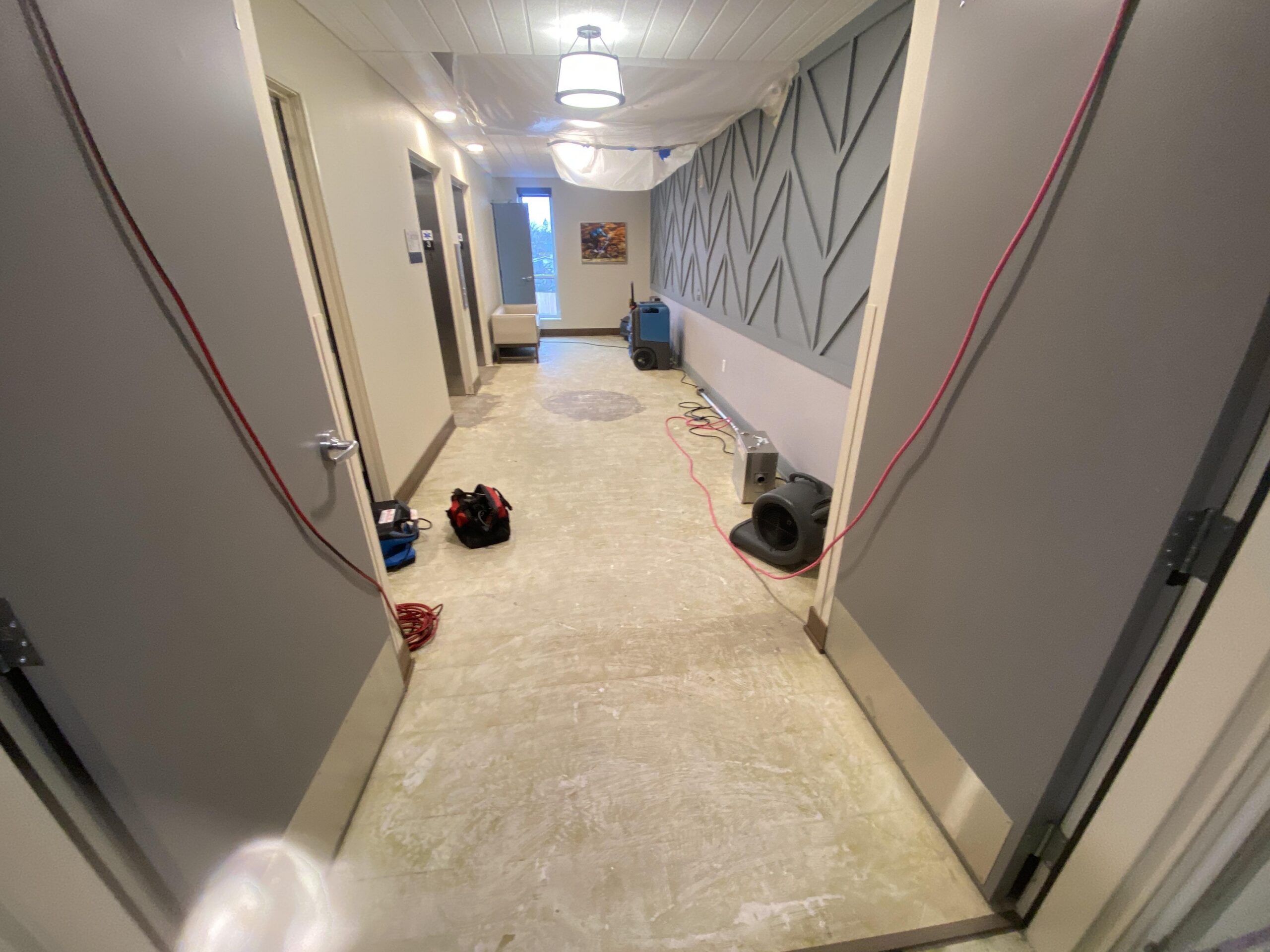
Following water extraction, technicians position commercial air movers and dehumidifiers to remove remaining moisture. Throughout the drying process, moisture levels are monitored to evaluate progress and determine whether equipment adjustments are necessary.
Removal of Unsalvageable Materials
Certain building materials may require removal if they cannot be adequately dried or cleaned. Depending on the extent of the damage, this may include saturated insulation, drywall, carpeting, or other compromised materials.
Cleaning, Sanitization, & Repairs
After drying, affected areas may require cleaning, antimicrobial treatment, and additional restoration work.
Experience Managing Water Damage in Occupied Office Buildings
Water damage in multi-story office buildings can quickly spread between floors, affecting multiple businesses and creating significant operational disruptions. Service Restoration’s experience includes an emergency at an occupied office building where a sprinkler head was accidentally damaged during a game of mini-putt. Water spread across the 18th, 19th, and 20th floors, requiring immediate action to protect the property and limit disruptions.
Our team arrived within just 12 minutes to assess the damage, with six crews on-site within 20 minutes. The restoration process involved commercial water extraction, navigating secure building access, and strategically managing equipment in occupied workspaces. Thanks to our rapid response and efficient cleanup efforts, we prevented secondary damage, including mold growth and water spreading into previously unaffected areas.
Get Emergency Commercial Water Damage Cleanup Services Now
Our licensed and insured company combines IICRC-certified technicians, advanced restoration equipment, and comprehensive reconstruction capabilities to manage every stage of recovery. Contact Service Restoration today for 24/7 commercial water damage restoration. Schedule an emergency assessment and let our team develop a business water damage restoration plan tailored to your property, operational priorities, and recovery needs.